


Picture this: a homeowner types “local home builder” into a search engine, lands on several contractor web pages, and—within seconds—decides whom to call. Chances are, they stay with the site that’s easiest to understand, not necessarily the one with the longest history or biggest brand. Clarity and simple navigation guide customer choices online today. In this article, we’ll explain why contractor website design is a powerful lever for winning more calls, and how clear, user-friendly sites translate directly to lead generation for all types of small businesses—from home services to restaurants and local shops.
Understanding Contractor Website Design: First Impressions and User Behavior
A modern contractor website acts as the digital front door to your business. Just like a first meeting, visitors form opinions almost instantly—often within 8 seconds of landing on a page. People searching for a contractor, restaurant, or professional service rarely read every word; instead, they scan for cues that show what you offer and why you’re credible. User behavior research shows that visitors naturally scroll down modern sites, rarely clicking through multiple pages unless absolutely necessary. This rapid decision-making is universal across industries, not just construction. If a website is confusing, painfully slow, or requires too many clicks to get information, visitors will abandon it and move on to a competitor.
The lesson for businesses is simple: online success begins with designing websites that match the way customers browse. Most visitors come with intent—they want to solve a problem or hire a service. If your site is built with their habits in mind, focusing on clarity and speed, you deliver a positive first impression that keeps them engaged and increases the odds of a conversion—whether that’s a call, booking, or purchase. This approach to user-focused web design makes your business stand out in a crowded digital marketplace.
How Most Visitors Interact With Contractor Websites
- Visitors form opinions in seconds, typically around 8 seconds
- Users scroll and scan pages instead of reading everything
- First impressions influence whether a customer stays or leaves
- Clicking multiple pages often causes frustration and makes visitors leave
The Impact of Clear Website Design on Lead Generation
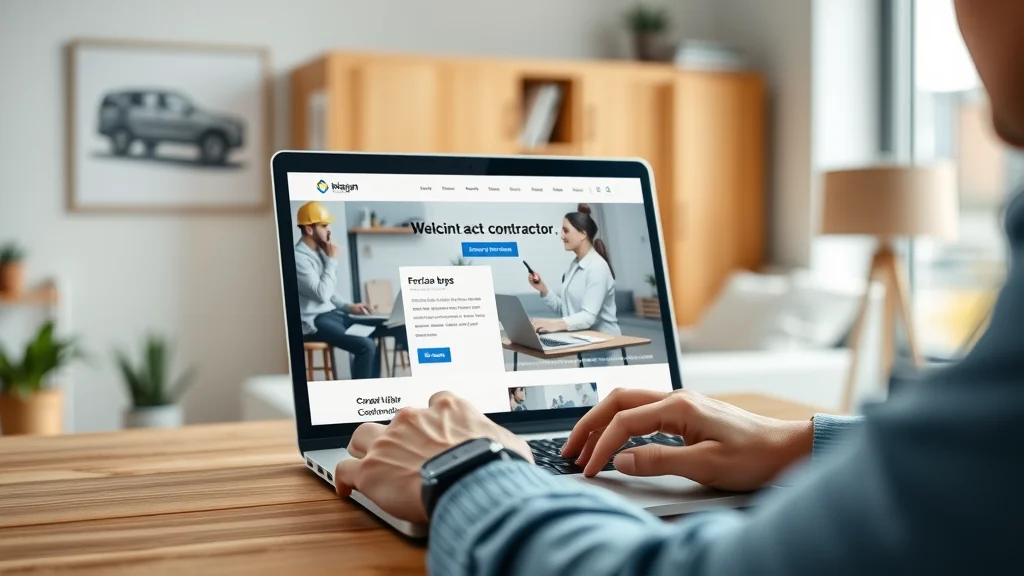
A clear and well-structured contractor website makes it easy for visitors to recognize your value, reducing the cognitive load of figuring out what to do next. When web design is confusing or cluttered, potential clients stumble—unsure whether to stay, click onward, or leave. Simple navigation, direct messaging, and visible calls-to-action (like a “Call Now” button or contact form) boost lead generation for any business, not just contractors. This user-first approach sets your company apart from competitors whose sites require too many clicks or too much reading before taking the next step. A contractor website built on clarity will consistently outperform flashy but complicated web builds every time.
For those looking to further refine their website’s effectiveness, exploring structured content strategies can provide a tactical edge. Implementing a systemized approach to publishing and organizing information, as outlined in the Structured Local Authority Publishing guide, helps ensure your site remains both user-friendly and optimized for search engines.
Most importantly, conversion—meaning turning a website visitor into a caller, customer, or lead—relies on guiding behavior, not just sharing information. The reality is, your ideal client is comparing you with others and will contact the business whose site makes the next step easy and obvious. By prioritizing web design that highlights your services and prompts action, you position yourself to win business in a digital-first world.
What You'll Learn From Contractor Website Design That Builds Trust
- How clarity in contractor website design increases calls and lead conversions
- Why one-page website designs outperform complex structures
- The role of mobile-first website design in customer decisions
- How service pages and contractor web layout guide users and build trust
The Core Principles of Contractor Website Design for Lead Generation
One-Page Structure Versus Complex Navigation
A major trend in contractor web design—and for any local business website—is the move away from complex multi-page structures. People today expect to scroll through information, not click through layers of pages. One-page layouts put all vital information in one place, ensuring visitors never get lost or frustrated. This design style reduces friction and helps more users reach your main call-to-action without obstacles. The more you ask someone to click, the more likely they are to get distracted or abandon the process altogether. This principle holds true whether you’re a home builder, dentist, or coffee shop: make information accessible and reduce barriers.
Complex navigation, on the other hand, works against modern user behavior. When a contractor website or small business site is built with menus, dropdowns, and multiple redirecting links, it often leads to confusion, higher bounce rates, and lost opportunities. By minimizing clicks and maximizing on-page clarity, you send a strong message that your business values the customer’s time—building trust right from that first scroll.
The Role of Clear Messaging and Service Pages
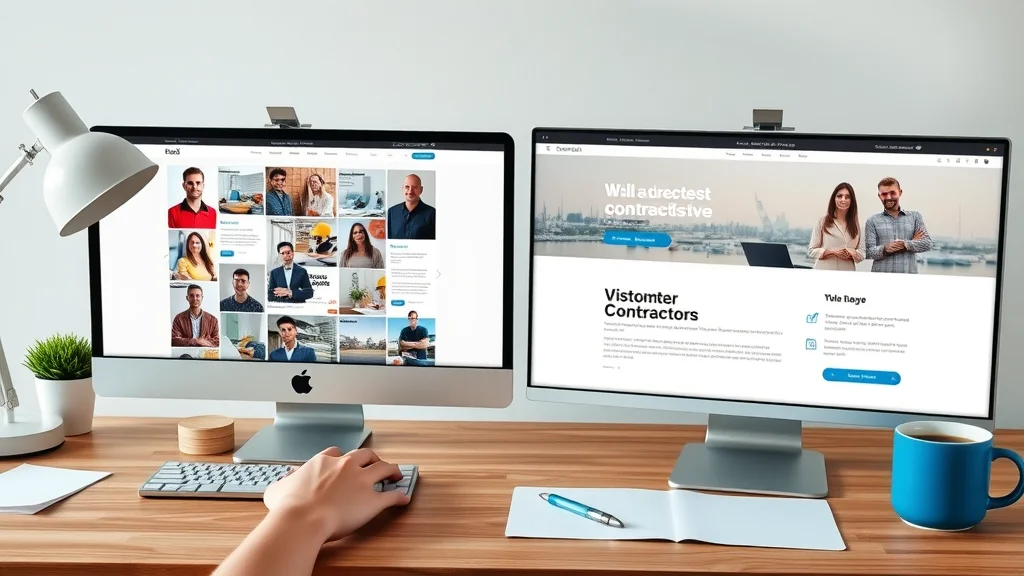
Visitors searching for a general contractor or home service business are usually in a hurry. They want to know what you offer, where you work, and how to get in touch—fast. Effective contractor websites use clear, specific messaging on their service pages to ensure that anyone scanning the site can quickly identify the right service area and type of contractor. Each service page should feature concise descriptions, relevant images, and straightforward value statements. This structure fosters trust because it lets potential customers see at a glance whether you meet their needs.
As users scroll, the web design should support their natural browsing habit. Grouping service areas, providing client testimonials, and showcasing recent featured projects gives visual confirmation of your abilities. Contractors and home service businesses that use thoughtfully designed service pages build trust more efficiently—removing doubt and uncertainty from the hiring process. A good layout also supports search engine optimization by highlighting core services, increasing visibility for keywords that matter to your business.
Mobile-First Web Design and Page Speed Matter
In today’s mobile-centric world, most website visitors come from smartphones or tablets. Contractor websites must load quickly, display cleanly on small screens, and keep calls-to-action visible as users scroll. Mobile-first web design means building a site that looks and works flawlessly on mobile devices first, rather than trying to adapt a desktop design for phones. Page speed is crucial—if your website takes more than a few seconds to load, even the most interested customer will likely move on. Google and other search engines favor fast, mobile-optimized sites, so this investment pays off with better rankings and more lead generation.
Small businesses across every industry—plumbers, restaurants, medical offices—benefit from embracing mobile-first design principles. Layouts should avoid tiny buttons, overlapping text, and hard-to-find menus. Calls-to-action should be easy to tap, and important information should load immediately. This approach not only improves user experience, but also demonstrates professionalism and attention to modern customer habits.

Ensuring Calls-to-Action Are Visible On Contractor Websites
A common cause of lost leads is hidden or unclear calls-to-action. Contractor websites—and any business website—should make it obvious what you want the visitor to do. Place a phone number or contact button at the top of the page, keep it visible as users scroll, and repeat it at logical stopping points throughout the content. Strong web design uses color contrast, readable fonts, and plenty of spacing to guide the eye toward the next step.
Avoid burying contact forms or scheduling links under multiple sections. If you’re a home builder or service business, consider showing a sticky “Request Estimate” or “Call Now” button at all times. The easier it is for users to act, the more likely you are to turn a visitor into a customer. This principle is foundational for effective lead generation: tell them what to do—and make it effortless.
Competing Online: Contractor Website Design and Customer Comparison
How Customers Compare Contractor Websites and Make Decisions
When searching for a contractor or service provider, most people do not carefully weigh every feature, price, or review. Instead, they scan several company websites, seeking an instant sense of trust and clarity. The business whose site “makes sense” fastest often wins the call. Complex, outdated, or confusing contractor websites typically lose out to sites that explain their offer clearly and use visual hierarchy to guide decisions.
It doesn’t matter if you’re a general contractor, restaurant owner, or dental clinic—customers choose the business that feels approachable, easy to contact, and legitimate. In other words, you are not just competing on the quality of your services. You’re battling for online attention with your website's simplicity and immediate value. When your contractor website is designed to match user behavior and guide the next step, you greatly improve your chances of getting calls and inquiries.
Why Clarity in Website Design Often Wins over Reputation
Even with a strong offline reputation, a confusing website can cause you to lose potential customers. People want instant understanding—if your contractor web presence makes it difficult to see what you offer or how to start, they move to the next visible, simple competitor. Clarity builds trust quickly and beats reputation in the critical early seconds of a web visit. Businesses that explain their value in plain language and remove barriers attract more qualified leads online.
Another point to consider: many customers skip “About” pages, project galleries, or detailed company history at first. What matters most is how easy your contractor website makes it to take the next step. A clear structure and fast-loading, mobile-optimized layout outshines even the most established brand if that brand’s site is hard to navigate.
Building Trust Quickly With Strong Web Design Elements
The fastest way to build trust online is to combine clarity, consistency, and professional design elements. Use real photos of your team and work, display client testimonials, and keep your service page information up to date. Modern contractor web design isn’t about flashy animations or overwhelming graphics, but about showing potential clients that you are real, reliable, and ready to help. Visual cues—like licensed badges, recognizable project photos, or clean “Meet the Team” sections—reinforce your credibility in moments.
This applies equally to all small businesses. When a new visitor lands on your contractor website, restaurant menu page, or medical service portal, they want proof of quality, recent work, and a simple way to reach you. Strong design elements help you build trust and reduce hesitation with every scroll.

Conversion Defined: Turning Website Visitors into Customer Calls
Why Website Design Directly Impacts Lead Generation
Conversion is the central goal of any contractor website: turning visitors into callers, customers, or clients. Your site’s structure, clarity, and user flow decide whether a visitor feels confident enough to make contact. Web design is not merely a digital brochure—it’s the foundation of your online lead generation system. Clear messaging prompts users to act, while a cluttered or confusing interface introduces hesitation and drop-off.
Consider the path a typical potential customer might take: after comparing several contractor websites, they spend the most time with the one that answers their biggest questions up front, explains location and services clearly, and displays a prominent call-to-action. This principle applies to all industries—bookings, purchases, or leads are highest for sites built on user-first web design and proven content strategies.
| Website Feature | Positive Effect on Conversion | Negative Effect on Conversion |
|---|---|---|
| Clear Messaging | Answers user questions instantly; reduces confusion | Vague or hidden messaging deters action |
| Mobile Optimization | Site adapts to any device; increases engagement | Poor mobile layout drives away mobile users |
| Visible Calls-to-Action | Prompts user action with clear next steps | Hidden or missing CTAs reduce inquiries and calls |
| Page Speed | Faster loading retains impatient visitors | Slow sites lead to higher bounce rates |
Common Reasons Contractor Websites Lose Potential Customers
Many businesses assume that if traffic is coming in, conversions will naturally follow. In reality, many contractor websites lose leads due to breakdowns in clarity, navigation, or speed. Common mistakes include burying the phone number or contact button, using industry jargon instead of plain language, or relying on images without captions or context. Slow load times frustrate modern users, who expect instant information.
Other frequent issues include outdated designs that look unprofessional, broken links, and missing mobile optimization. When these issues occur, even a top-notch service business can lose out to a slightly smaller competitor whose site simply works better for today’s browsing habits.
Website Design in Action: Real-World Scenarios
Scenario: Contractor Web Design For Service Businesses
- How a home builder presents services on a single page
- Example of service pages structured for clarity
- Use of featured project sections to demonstrate expertise
Consider a home builder who wants to attract new leads. Instead of sending visitors through a maze of subpages, they design their contractor website as a streamlined, one-page experience. Their main menu links simply scroll users to the right section—services, a gallery of featured projects, testimonials, and contact. Each service page section explains the type of work performed, service area, and value proposition in direct language. The design uses real photos, clear headings, and bold calls-to-action (“Request Quote”). A rotating gallery of recent projects gives visitors instant proof of professionalism and experience. This modern approach serves both search engine optimization goals and real visitor needs, improving lead generation no matter the business type.
Scenario: How a Website Build Can Shape Lead Flow
The way your site is built—its structure, calls-to-action, and mobile responsiveness—guides how visitors behave. If a restaurant’s website features a visible “Book a Table” button on every page or a dentist’s portal shows Friday appointment slots right on the home page, the result is more inquiries and bookings. A general contractor website built to highlight contact options, recent jobs, and reputation proof means users spend less time searching and more time converting. In summary, smart contractor web builds shape visitor flow, reduce frustration, and directly improve lead outcomes.
Importance of Fast Load Times in Lead Conversion
Slow-loading contractor websites kill conversions. Even a delay of a few seconds can result in high bounce rates, meaning visitors leave before interacting at all. This holds true for retail stores, service businesses, and medical clinics alike. Modern web design tools measure and optimize speed to ensure that images, scripts, and navigation load immediately, no matter the device.
A fast site signals professionalism and respect for client time, both of which build trust. It also supports higher rankings in search engines, driving more traffic to a well-optimized contractor website. Ultimately, speed is a foundation for all successful lead generation websites and must not be ignored at the design phase.

The Reality: Website Visibility, Search Engines, and Lead Flow
Why Traffic Alone Does Not Generate Leads for Contractor Websites
Many contractors and small business owners invest heavily in web design and search engine optimization but still struggle to get calls. The disconnect often lies in assuming that web traffic alone means new leads. In fact, traffic is just the starting point. Without a user-focused contractor website design that removes confusion and clearly shows visitors what to do next, even the highest-ranking site may produce little real business.
Businesses across every sector—including home services, medical practices, and retail—benefit most from sites built with lead flow and conversion in mind. Each element, from page layout to micro-copy, must reinforce the next step and make it obvious why, when, and how a visitor should act.
How Search Engines Deliver Visitors—But Design Converts Them
Search engines are powerful tools for bringing visitors to your site—but only the right web design turns visitors into leads. Site visibility, fast load times, and strong keywords get your business shown in search results; clear messaging and design turn those visitors into customers. As soon as someone lands on your contractor website, you have a brief window to make your value apparent and win their trust.
No matter how good your service is, you risk losing potential customers if your website doesn’t match how people browse and make decisions today. Businesses that consistently make their offer and next steps obvious outperform those that invest only in traffic generation or advertising.
Building Trust and Reducing Friction in Contractor Website Design
Design Elements That Help Visitors Take Action
Small businesses build trust online by making websites simple, modern, and intuitive. Usability builds trust as much as testimonials or reviews. Displaying licensing, completed projects, service area maps, and a friendly team photo can all reinforce legitimacy. Equally important is reducing friction: avoid pop-ups, slow slideshows, or excess form fields.
Lead generation web design relies on minimal distractions and streamlined paths to action. Highlight your main offer quickly (“Free Estimate,” “Book Now,” or “Call Us”), use contrasting color for calls-to-action, and keep content blocks tidy. The result is more action from potential clients and fewer lost opportunities.
Simple Structure and Immediate Value for General Contractor Sites
General contractor websites that convert perform best with a simple structure—home, services, proof, and contact. All vital info is visible in a few scrolls, so visitors get immediate value without effort. Supporting sections like FAQs or “featured project” galleries add credibility while reinforcing your expertise. Avoiding excess navigation links and focusing on clarity directly increases leads, whether you run a home building firm or a cleaning company.
“Most customers decide to call not because they read everything, but because what they saw made sense right away.”
People Also Ask: How Contractor Website Design Impacts Business
How does contractor website design increase customer calls?
Clear design reduces confusion, shows what’s next, and encourages visitors to call or inquire. When users know how to reach you, they are much more likely to become customers.
What features should a contractor website include for better lead generation?
Features such as simple one-page navigation, fast loading speeds, visible calls-to-action, and focused service page sections help guide visitors naturally to contact your business.
How important is page speed in contractor website design?
Page speed is critical: even a few seconds of delay can drive visitors away. Fast-loading contractor websites lead to more calls and better lead generation outcomes.
FAQs About Contractor Website Design and Lead Generation
-
How do contractor websites build trust with new customers?
By using professional design, up-to-date service information, clear project galleries, and easy-to-find calls-to-action, contractor websites help new customers feel confident about making contact. -
What common mistakes hurt lead generation on contractor websites?
Common issues include complex navigation, slow loading, hidden contact options, outdated visuals, and unclear messaging about services or pricing. -
Why is mobile-first design important for contractors?
Since most browsing happens on phones, designing for mobile first ensures all visitors can find what they need and act quickly, increasing conversions. -
How can updating web design improve conversion rates?
Updates that focus on clarity, speed, and streamlined user pathways help more visitors become leads by making their experience easier and more intuitive.
Key Takeaways On Contractor Website Design and Lead Generation
- Simple, clear contractor website design increases conversion and call rates
- First impressions and easy navigation are crucial for customer decisions
- Mobile-first, fast-loading pages win over more visitors
- Businesses that explain their value quickly are chosen more often
Consistent Contractor Website Design Grows Visibility and Customer Calls
How Ongoing Improvements Stack Up Over Time
Small changes—like refining calls-to-action, improving mobile layouts, or updating project photos—add up to improved lead generation month after month. As your web design and messaging become more consistent, search engines recognize your site as authoritative and visitors associate your brand with professionalism.
Watch: How a Contractor Website Upgrade Drives More CallsSee a general contractor’s site transform from cluttered and outdated to clean, mobile-friendly, and conversion-focused. The animation highlights the journey to faster loading, easier navigation, and greater trust – all in a short explainer video.
Why Making Your Website Clearer Leads to More Leads
Clear, focused contractor website design sends a signal that your business is modern, trustworthy, and ready for action. The easier it is for a new visitor to understand what you offer and how to start, the more likely they are to reach out. Consistency and ongoing clarity improvements compound over time, providing a steady and growing stream of new leads—no matter your industry.
Explore How Lead Generation Websites Work for Contractors
Discover a System Designed to Turn Website Visitors Into Customer Calls
If you want to see how a lead generation-optimized website can be built for your service business, explore our proven approach. Learn how clarity, mobile-first design, fast load times, and frictionless calls-to-action work together to consistently turn visitors into leads.
Learn More: https://localauthoritycontentsystem.com/lead-generation-website-system
Conclusion: Every step toward clearer, more streamlined contractor website design brings greater visibility and leads. With steady improvements and a focus on user experience, your business becomes the easy, obvious choice for new customers.
For those interested in elevating their digital strategy even further, consider exploring the broader insights and methodologies behind effective local authority content. The Local Authority Content System™ Insights & Strategy offers a comprehensive look at building trust, authority, and visibility through structured publishing—empowering your business to stand out and attract more qualified leads in any competitive market.




Write A Comment