


Do your website visitors instantly know what your business offers—or do they leave confused, unsure if you can solve their problem? In a world where attention spans are measured in seconds, even the smallest hint of an unclear website message can send your ideal client straight to your competitor. Discover why unclear messaging is the silent killer of conversions—and what you can do right now to keep visitors engaged and turning into loyal customers.
Does Your Website Suffer from an Unclear Website Message?
Picture your website through the eyes of a potential client: do they understand in those critical first few seconds who you are, what you do, and how you can help? Or are they left decoding jargon, searching for a clear message, and wondering if your site is relevant to their needs? An unclear website message is more common than you think, and it’s one of the top reasons behind high bounce rates and lost business opportunities. Today’s web users are flooded with information; if your website doesn’t immediately resonate, they’ll move on—no second chances.
Business owners and small business owners frequently overlook their website messaging, often focusing on flashy website design instead of concise website content. However, confusing, vague, or inconsistent messaging is the digital equivalent of a big red stop sign, warning potential clients to look elsewhere. Your website content must do more than describe your business—it needs to make sense from the first headline and prove you can solve their problem. If your site’s bounce rate is high, or if you notice visitors not taking action, your messaging may be the culprit. Next, let’s dig deeper into what makes clear messaging so powerful and how unclear messaging subtly drives away opportunity.

The Subtle Power of Clear Messaging in Website Content
Clear website messaging isn’t just about clever taglines or fancy graphics. At its heart, it’s about ensuring every visitor feels understood, welcomed, and guided toward a solution. Effective messaging acts as a direct line to your ideal client, signaling they’re in the right place and that you understand—and can solve—their problem. Clear messaging also sets the tone for trust; when visitors feel your site “speaks their language,” they’re more likely to explore your offerings and eventually convert into paying customers.
On the other hand, unclear messaging leads to uncertainty and hesitation. Visitors may wonder if your product or service suits their needs, what makes you different, or even what you do at all. Just like a general surgeon lacks the specialization to perform heart surgery, a website with a generic or confusing message can’t attract the type of person—your ideal client—who needs your specific expertise. In short, your website content must work like a skilled surgeon: precise, targeted, and fiercely clear.
For those looking to take a more structured approach to improving their website messaging, exploring proven frameworks can make a significant difference. The Local Authority Content System™ Insights & Strategy offers actionable strategies for publishing content that resonates with your audience and enhances clarity across your site.
What You'll Learn About Unclear Website Message Problems
- Why an unclear website message leads to high bounce rates
- How clear messaging builds trust and engagement
- Common signs of unclear messaging in website content
- Steps to align messaging with your ideal client
- Expert tips to ensure your site solves their problem
Understanding Unclear Website Message: What Is It & Why It Matters
An unclear website message is any content, headline, or call-to-action that fails to tell your visitor—within seconds—what you offer, who you help, and why it matters. This is not just a minor copywriting misstep; unclear messaging turns a strategic marketing asset into a missed opportunity for connection. Every element of your website content should reinforce your unique value proposition and show your ideal client how you’ll solve their problem.
Inconsistent branding, rambling language, or value statements that don’t address real client pain points are all symptoms of unclear messaging. For small business owners using a website builder or DIY website design, the challenge is often knowing what to cut and what to keep. If your homepage reads more like a generic template than a targeted invitation, you face a higher bounce rate and far fewer conversions. Recognizing and correcting this is mission-critical to stand out in a world where attention spans are shorter than ever.
Defining Unclear Messaging Versus Clear Messaging
Clear messaging is direct, conversational, and tailored to your target audience. It answers these questions up front: Who are you? What do you offer? How does it benefit me? Unclear messaging, in contrast, is vague or generic, full of industry jargon, or so focused on features that it forgets the big red message your reader actually wants to hear—“We understand and can solve your problem. ” A clear message is basically clear copy in action; it motivates action because it makes sense and feels personal, driving higher engagement and trust.
For example, imagine two websites for the same service. One immediately tells you, “We help small business owners build online stores that sell. ” The other rambles on about “innovative e-solutions” without saying for whom or what specific problem is being solved. Clear messaging is the difference between a welcoming handshake and a confusing puzzle. Visitors who encounter clear copy recognize themselves as the ideal client and know what step to take next—whether that’s learning more, signing up, or making a purchase.
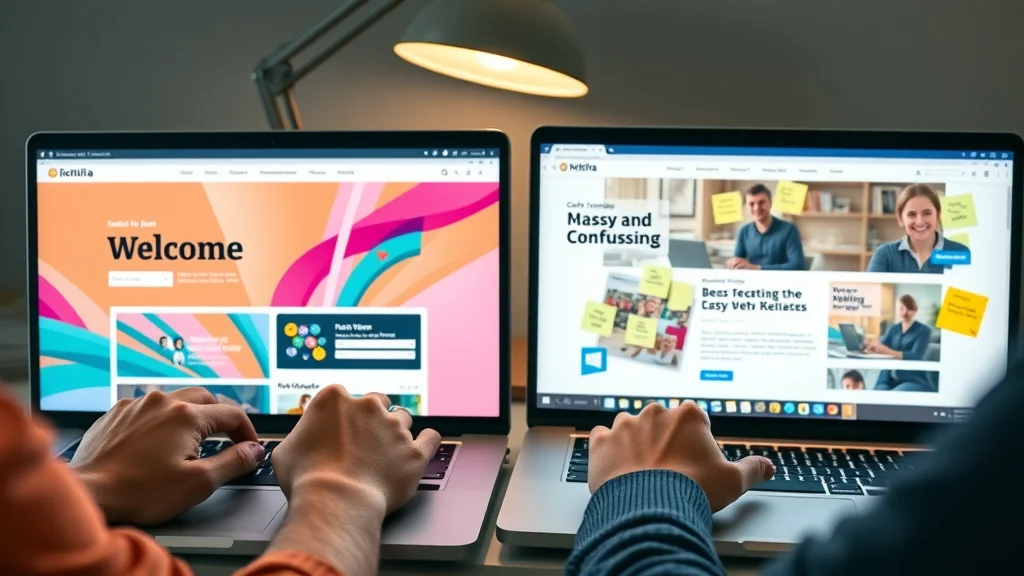
The Direct Impact of Website Content on User Behavior
The content on your website is the first, and sometimes only, conversation you’ll have with your potential customer. When messaging is unclear, confusion sets in. Studies show that users form judgments about a business website’s credibility in milliseconds, and if it doesn’t make sense or immediately address their needs, people leave. This hurts more than just short-term conversions—it damages your long-term brand reputation.
Consistent, clear messaging reduces bounce rates and increases the time visitors spend on your site. Every element, from headlines and subheadings to image captions and calls to action, must work together to build trust and clearly explain how you can solve their problem. This is how you transform every website visit from a missed lead into a meaningful opportunity to connect with your ideal client. Your website content isn’t just decoration—it’s your most powerful sales and marketing tool.
How an Unclear Website Message Drives Visitors Away
When your website message is unclear or inconsistent, visitors are forced to work too hard to “get it. ” In a world where attention spans are shrinking and choices are abundant, most potential customers won’t stick around to figure things out—they’ll simply click away. The cost is real: a confused visitor does not become a customer. High bounce rates, lost conversions, and a poor reputation with your audience and search engines all begin with unclear messaging. Websites that fail to showcase their unique value proposition and directly address the needs of their ideal clients lose not only sales, but also credibility and trust—two things that are hard to regain in digital business today.
For small business owners, the stakes are even higher. Each visitor is precious, and every lost opportunity with your target audience is a setback for growth. Even an otherwise brilliant website design can’t compensate for confusing content that doesn’t make sense. The clearest path to results is a laser-focused message that tells visitors: you belong here, and we can solve your problem—no guesswork required.
Missed Opportunities with Your Ideal Client
Unclear website messaging is like holding up a “Do Not Enter” sign to your ideal client. Instead of guiding them toward action—whether it’s joining your list, requesting a quote, or booking a service—vague headlines, ambiguous “big red” messages, or unfocused content leaves them questioning whether you’re even the right business for them. This uncertainty is especially damaging for small business owners who rely on building quick trust with potential customers in a noisy digital landscape.
When website content fails to address specific pain points or doesn’t showcase a unique value proposition, even a qualified potential customer will pass you by for a competitor who demonstrates clarity. Missing these opportunities not only impacts revenue but also slows your business growth and weakens your connection to people looking for the exact solutions you offer. In short, every moment of confusion is a moment lost to indecision—and to your competition.

Common Website Content Mistakes Hurting Clear Messaging
Business owners often unknowingly sabotage their own websites by making messaging mistakes that drive visitors away. Common errors include using industry jargon instead of simple, direct language; neglecting to explain who the website is for; or failing to clearly outline how you solve their problem. Another frequent issue is “copycat” content—a website that mimics competitors without crafting a unique value proposition for their ideal client.
Other mistakes include having vague or generic headlines, inconsistent branding, outdated information, or multiple conflicting calls to action. Each of these factors contributes to website content that doesn’t make sense for your target audience. Ultimately, these small errors add up and cause visitors to leave, crash your website’s performance with search engines, and frustrate your efforts to connect with the right type of person your business seeks to help.
Identifying Signs of Unclear Website Messaging
- Vague headlines and calls to action
- Inconsistent branding or language
- Messages that don’t solve their problem
- Lack of clarity about who the website is for
Each of these signals tells your ideal client that your site may not be the answer they’re looking for. If your headlines are generic or packed with buzzwords, visitors won’t see themselves in your solution. Inconsistent language or branding causes confusion and erodes trust, while messages that don’t address a real pain point leave visitors uninterested. Finally, if your content doesn’t make it explicit who your business helps, those who could’ve become loyal customers will simply disappear, and you’ll never know just how much business was left on the table.
Expert Insights: Quotes on the Value of Clear Website Messaging
"Clear messaging is not just about words—it's about ensuring your visitors instantly know they're in the right place and that you can solve their problem."
Industry experts and successful business owners agree: website content that cuts through the noise to deliver a strong, clear message consistently outperforms flashy design or clever taglines. Clarity, above all, is what convinces customers they’ve found the right fit for their needs.
Step-by-Step Guide: Correcting an Unclear Website Message
Ready to transform your website content and start converting visitors? Here’s a proven, practical framework to turn unclear messaging into clear messaging that attracts and converts your ideal client:

- Audit your current website content for clarity
- Identify the needs of your ideal client
- Create messaging that solves their problem
- Test messaging with real users
- Refine your content based on feedback
Start by objectively reviewing your site as your target audience would: is it instantly obvious what you do? Next, clarify who you serve and articulate their pain points. Craft all website messaging around how you uniquely solve their problem, rather than focusing solely on services or features. User testing ensures your message is not only clear in theory, but also practical for real visitors. Iterative improvement, guided by honest feedback, is the final step toward transforming an unclear website message into a catalyst for business growth.
| Aspect | Clear Messaging | Unclear Messaging |
|---|---|---|
| User Engagement | High | Low |
| Bounce Rate | Low | High |
| Relevance to Search Engine | Strong | Weak |
| Appeal to Ideal Client | Direct | Indirect |
| Conversion Probability | High | Low |
Optimizing Website Content for Search Engine Visibility
Even the most persuasive website messaging is useless if no one finds it. Search engine algorithms reward clarity and penalize vague, confusing content. When every headline, meta tag, and body paragraph matches the language your ideal client uses—and aligns with their search intent—your site is more likely to appear in relevant search results. Unclear website message not only hurts engagement, but also diminishes search engine visibility. This double impact makes transparency in your content plan essential for both visitors and search engines alike.
Small business websites that prioritize strong website content with clear copy and a unique value proposition consistently outperform those with confusing, feature-heavy, or inconsistent messaging. Improving both your website’s clarity and SEO ranking starts with speaking directly to the target audience, demonstrating you can solve their problem confidently.

How Search Engine Algorithms React to Unclear Website Message
Search engines favor sites where the content is easy to understand, relevant, and clearly presented. When your website messaging is ambiguous or lacks focus, search engine algorithms may struggle to categorize your site, which lowers your ranking and reduces organic traffic. This means even if a potential client is looking for exactly what you offer, they may never find your business website because your content doesn’t match what they’re searching for.
Unclear website content can also increase the bounce rate—another negative signal for search engines. A high bounce rate tells the algorithm that users aren't finding value on your pages, resulting in even lower visibility. Clear messaging, on the other hand, attracts the right visitors, encourages them to stay, and increases the chance that search engines will boost your site’s ranking for key terms related to your business and industry.
Best Practices to Improve Website Messaging and SEO
The key to merging clear messaging and great SEO is speaking the language of your target audience, using keywords they search for naturally within your content. Avoid keyword stuffing or generic statements; instead, focus on creating headlines, subheadings, and body text that communicate your unique value proposition. Consistent, clear copy that directly addresses your ideal client’s needs is rewarded by both search engines and users.
Regularly review and update your website content to reflect your current offerings and the latest language trends within your niche. Use analytics tools to pinpoint where users drop off or seem confused, and use feedback from real users to refine your messaging. The more clearly you can solve their problem in your messaging, the stronger your SEO results and user engagement will become.
People Also Ask: How Unclear Website Message Affects User Perceptions
How do you describe a bad website?
A bad website is one that confuses visitors from the outset, lacks a clear message or purpose, and fails to guide users toward meaningful actions. You might see cluttered layouts, inconsistent branding, unclear headlines, or too many calls to action that make sense only to the site owners—but not the users. Ultimately, a bad website makes visitors feel lost or frustrated, increasing the chance they leave without engaging further.
What to say when a website is under construction?
When a website is under construction, it’s crucial to communicate with clarity and transparency. Let visitors know when they can expect the site to be available, and if possible, provide alternative ways to contact your business or access key services. A simple "We're updating our website to serve you better. Please check back soon or contact us via email for assistance," reassures visitors that updates are temporary and helps build trust.
How do I announce a new website?
Announcing a new website should always start with a clear, concise message that highlights the benefits visitors will receive. For example, “We’re excited to announce our new website—now it’s even easier to find exactly what you need and connect with our team!” Share what’s new, emphasize how it helps your ideal client, and include a compelling call-to-action inviting users to explore and engage.
What does an unsecure website look like?
An unsecure website may display browser warnings, lack HTTPS or a padlock icon in the address bar, and can feel outdated or untrustworthy. Security is an essential part of website credibility—unclear messaging about safety, privacy, or how user data is handled further erodes trust. Always make sure your website is secure and clearly communicates its commitment to user safety.
FAQs on Unclear Website Message and Clear Messaging
- What is the most common cause of unclear website messages? The most frequent cause is failing to focus the content on solving your ideal client's specific problems, instead listing generic features or vague benefits that don’t connect with the audience.
- How can I quickly test if my website’s messaging is clear? Ask someone unfamiliar with your business to review your site for 10 seconds, then describe what you offer and who you help. If they can’t answer confidently, your messaging needs work.
- What tools help identify messaging problems in website content? User testing, analytics tools that measure bounce rate and on-page engagement, and professional website audits can all pinpoint unclear messaging and guide improvements.
Key Takeaways: Why Clear Messaging Outperforms Unclear Website Messages

- Clear messaging is crucial for engaging your ideal client
- Unclear website message leads to lost conversions
- Improving website content has immediate SEO and engagement benefits
Take the Next Step: Transform Your Website Messaging
Discover How Lead Generation Websites Work to Boost Your Business
Your website should deliver clear messaging that connects with your ideal client, builds trust, and solves their problem on page one. If you’re ready to upgrade your online presence and start converting visitors into customers, explore how professional lead generation websites can work for your business. See how Lead Generation Websites work now →
Watch this short explainer: See how clear messaging turns confusion into conversions and unlocks growth for your business website.
If you’re interested in elevating your entire content strategy and want to ensure your messaging is consistently effective across every page, consider diving into the broader principles behind successful content publishing. The Local Authority Content System™ Insights & Strategy provides a comprehensive look at building authority, trust, and engagement through structured content approaches. By applying these advanced insights, you can move beyond just fixing unclear messages—unlocking a sustainable framework for long-term growth and digital leadership in your industry.




Write A Comment